Why we should care for Digital Sovereignty, Hackerspace Brussels Software Freedom Day 2025
Software Freedom Day 2025 at Hackerspace Brussels: Why we need Digital Sovereignty (and where it comes from)
The debate surrounding technological or digital sovereignty has been ongoing for a while, but recently gained traction particularly with Trump back in office. Beyond decreasing dependencies in Europe, and investing in Open Source, one fundamental goal of digital sovereignty must be to protect fundamental rights. Sebastian’s presentation will trace the debate back to the industrial espionage that was revealed in the 2013 Snowden disclosures, data protection, and other fundamental rights in the digital age.
On Saturday, 20 September 2025, I had the opportunity of speaking at Hackerspace Brussels on the occasion of Software Freedom Day 2025. Here you can find my presentation with notes. Feel free to reach out.
Watch the live recording now!
(Update 2025-11-05: You can watch the recording on PeerTube now!)
Why we need Digital Sovereignty
(and where it comes from)
Sebastian Raible
Sebastian is a political consultant, representing Open Source businesses and their interests towards the EU institutions. He was previously a policy advisor and assistant to two Members of the European Parliament (2015-2024).
contact info
- sebastian at raible.be · raible.be
- Mastodon: @sraible@eupolicy.social
- Bluesky: @sebastianraible.bsky.social
disclaimer
I am a lobbyist for APELL – The European Open Source Software Business Association. While I am here in my personal capacity, some of my views overlap with that of the business interests I represent.
state of digital sovereignty
digital sovereignty
- digital and technological sovereignty
- data sovereignty
- goals: agency, control, skill
Notes: digital sovereignty definition
I see the terms “technological sovereignty” and “digital sovereignty” used interchangeably in the Euro bubble. People1 differentiate it into smaller categories, but for the purposes of this talk, I think it makes sense to talk about
- technological sovereignty where it comes to software, hardware, services,
- data sovereignty where it comes to data, and
- operational sovereignty where it comes to capabilities and skills. The goals are mainly to gain, or sometimes regain,
- influence over the design and functioning of
$tech(regulation (setting of rules) and oversight, but also access, documentation, skill enabling us to change the design and parameters of a$tech),- control whether the rules are complied with (monitoring, testing, enforcement),
- accountability of producers,
- sustainability (ecological, but mostly economically: savings and long-term sustainability of public investments),
- competitiveness and, implied as a result: prosperity.
see also
Achieving digital sovereignty: When every product already says “sovereign“ (Archive); Sean Fleming at the World Economic Forum uses digital, cyber, technological and data sovereignty more or less as synonyms: What is digital sovereignty and how are countries approaching it?

Notes: Cheetos next to a sandwich (for no reason.)
Dependence on technology has been used as a means to put pressure on the EU in international trade negotiations. (After such pressure has historically been and continues to be used to exploit other regions of the world by Europeans and the “West”.)
state of digital sovereignty
Quote: German EU Presidency programme (July 2020) … Europe must achieve sovereignty in the digital domain in order to remain capable of action on its own also in the future.
Notes: German presidency: digital sovereignty goal, motivated in particular by dependencies that became more obvious during the pandemic, like for the production of critical medicines, hardware, software and services, etc.
state of digital sovereignty
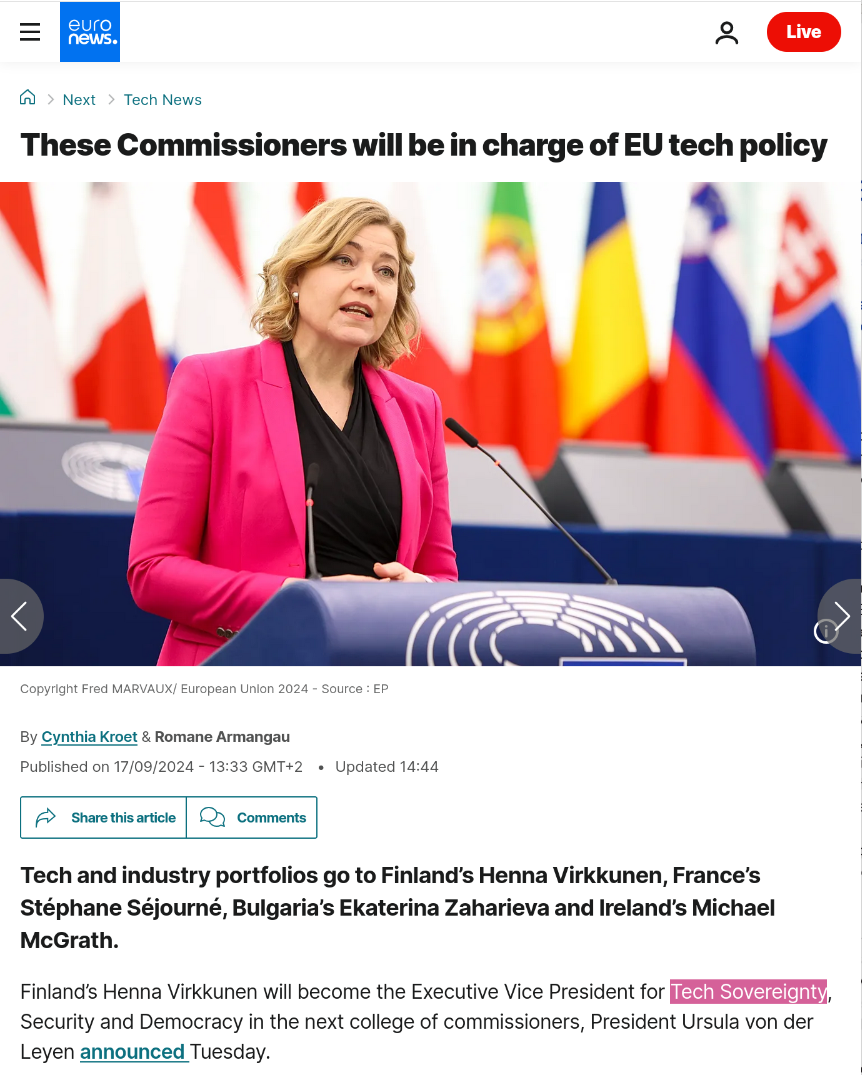
Notes: In 2024, the new European Commission came into office with the vice-president Henna Virkkunen’s job title literally including “tech sovereignty”.
state of digital sovereignty
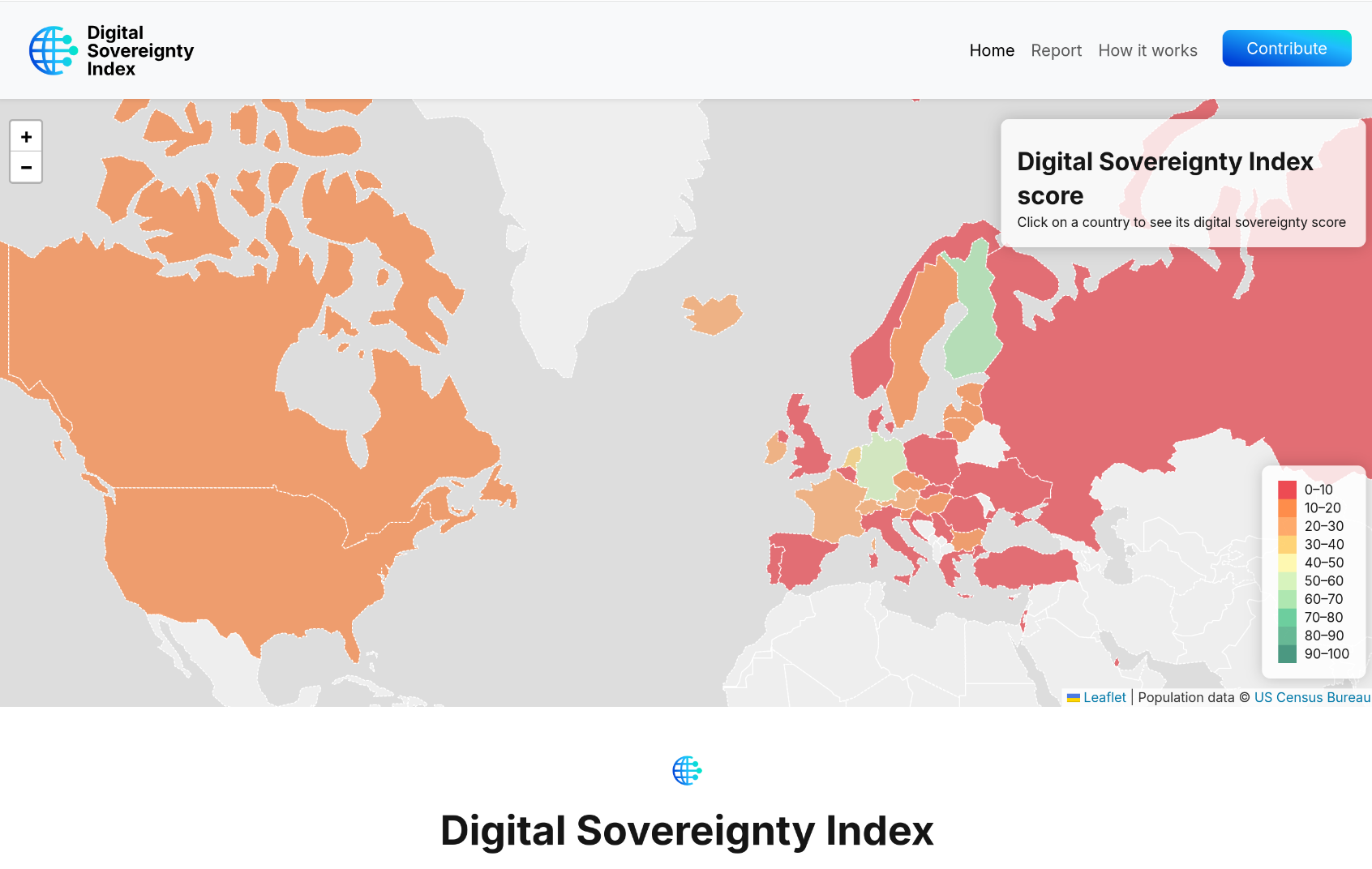
Notes: several initiatives exist that try to map the state of digital sovereignty, showing the level of dependency on products and services
state of digital sovereignty
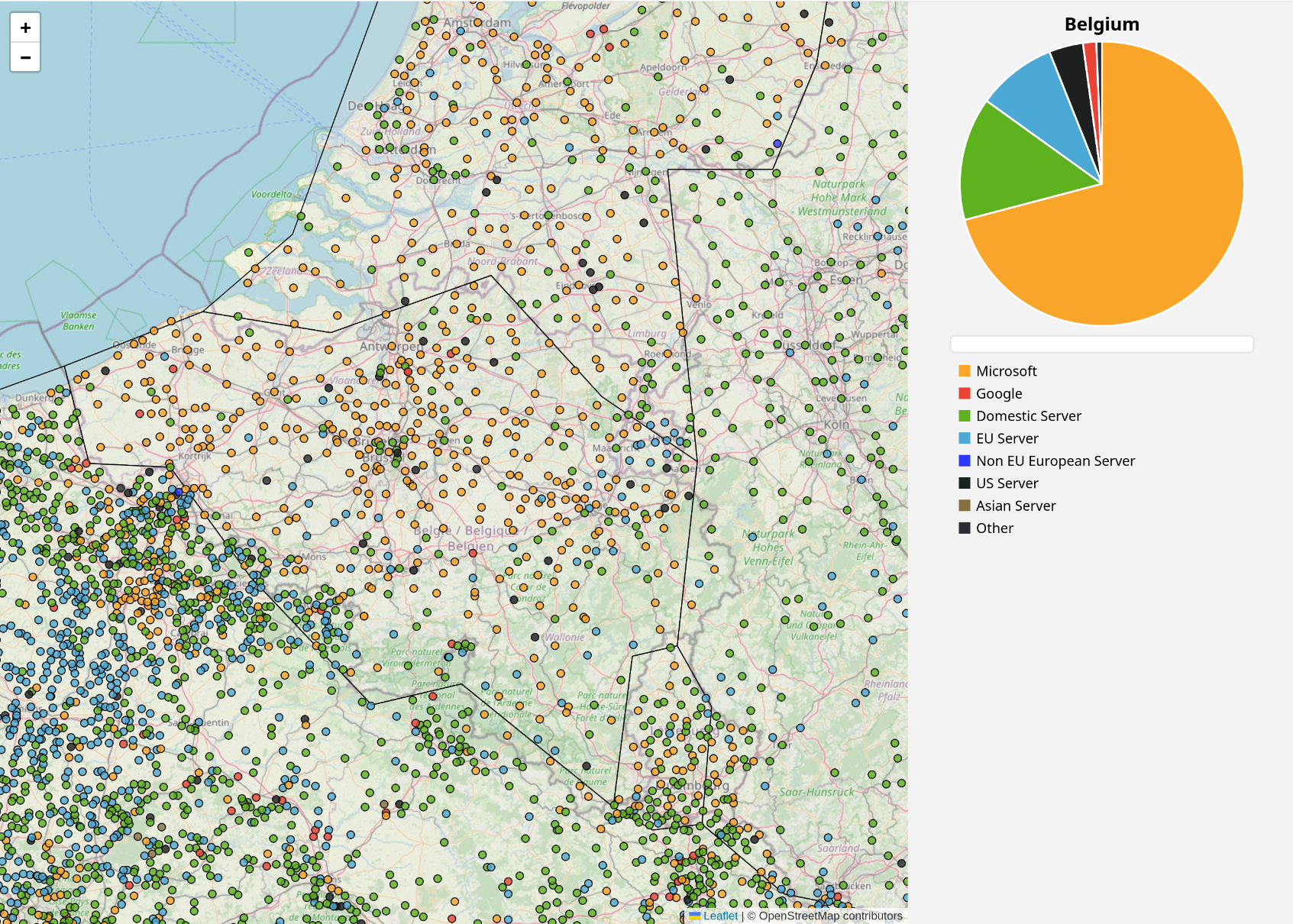
Notes: Including, of course, Jurgen Gaeremyn’s European Critical Dependencies Map that points out the reliance on extra-European mail infrastructure in public authorities
Why we need Digital Sovereignty
Notes: title of the talk!
Why we ~need~ should care for Digital Sovereignty
Notes: Actually: Why should we care for digital sovereignty?
[!tldr] digital sovereignty archives: Snowden
- 5 June 2013: first publications of NSA documents
- mass-surveillance of individuals
- industrial espionage implied
- 6 October 2015: CJEU rules Safe Harbour EU-US data transfer framework invalid (“Schrems I”)
- 14 April 2016: GDPR is adopted (entry into force 25 May 2018)
Notes: first publication on 5/June, attribution to Edward Snowden on 9/June
- global mass-surveillance, mostly metadata, some communication data
- July 2013: monitoring of EU Commission, network infiltrations revealed (Belgacom)
- secret cooperation between international intelligence services
- major email, cloud storage, telco operators and other services intercepted
- secret courts and limited democratic oversight (FISA) in the US
- October 2013: major heads of state targeted, Merkel famously says “spying among friends is not acceptable”, later it is revealed that her mobile phone might have been tapped since 2002
see also
- Wikipedia (EN): Edward Snowden Surveillance Disclosures
- Wikipedia (EN): 2010s global surveillance disclosures
Disclaimer on Snowden who continues to live in Russia, and has called rumours of the coming attack on Ukraine as conspiracy theories before the fact. Now apparently has citizenship and I haven’t bothered to try to find out more, but he seems to be silent.
[!tldr] digital sovereignty archives: Schrems II
- 16 July 2020: CJEU rules the Privacy Shield EU-US data transfer framework invalid (“Schrems II”)
- October 2022: Biden administration signs executive order to implement Data Privacy Framework %% as future basis for EU-US data transfers %%
- 10 July 2023: Commission adopts Data Privacy Framework adequacy decision
Notes: in large part on the basis of the Snowden leaks, the CJEU comes to the conclusion that personal data transfers to the US do not provide adequate safeguards to guarantee the protection of personal data granted by the Charter of Fundamental Rights. GDPR is in part as strong as it is because of the political discussions at the time, and as a result of Snowden
Notes: no notes.
“EU competitiveness”
Draghi report
Notes: sigh. Draghi report, one year ago
Draghi calls for “radical cuts” to the GDPR
- Result is reform of GDPR is no longer out of the question
- deregulation in the name of competitiveness
- Draghi likens regulations to tariffs
[!info] data sovereignty
- protection of trade secrets
- protection of personal data
Notes: digital sovereignty is not only about industry, trade, and business fundamental rights protections more important than ever
“digital colony”
Notes: I digress: “digital colony”
- dependencies on non-EU providers of digital products and services
- “lock-in” to incumbent providers (e.g. because of pervasiveness, incompatibility with alternatives, or lack of comparable alternatives)
- dependencies can (and previously have been) be used as means to put pressure on Europe in trade disputes and international relations
additional concerns exist regarding the confidentiality and security of data and trade secrets, with possible backdoors in hardware, software and services
- some EU efforts to reduce dependencies are underway but could be more concrete, efforts to increase (or achieve) digital/technological “sovereignty”
- (sovereignty itself can be problematic as it connects well with nationalist narratives but is now widely used outside of those contexts)
some private initiatives, notably “Euro-Stack” have gained traction, strong campaign with demands to “buy European” (similarly problematic) or at least shift investments to more European products and services
- “digital colony” narrative claims Europe is a colony to (usually) the US
- building on a general feeling of having been left behind, exploitation, victimisation by powerful international corporations
- “digital colony” ignores historic dimension of exploitation, genocide and systemic racism, **de-values and conceals intersectional and critical
digital colonialism
Notes: digital colonialism digression (contd.)
- narrative is not only problematic, but easily deconstructed: dependencies have been created willingly, by buying products and services in a free market economy, so not useful to moderates
See also:
- “digital colonialism” book (so far only in German, “Digitaler Kolonialismus” by Ingo Dachwitz and Sven Hilbig, https://www.chbeck.de/dachwitz-hilbig-digitaler-kolonialismus/product/37000393)
- Kahinde Andrews: The New Age of Empire
conclusion
==TODO==
Notes:
- Open Source
- run your own platforms and services
- needs political will
- do not weaken data protection, as that would also weaken
- our argument
- trade secret protection
- our society
- more positively: tech is widely available, affordable as never before
- copyright restrictions to content becoming more obvious again as the platforms are being enshittified to make (more) profit
- open culture
photo credit
- Cheetos.jpg: Scott Erhardt (PD)
- Screenshot Euronews (17/09/2024): These Commissioners will be in charge of EU tech policy
- Screenshot Nextcloud Digital Sovereignty Index
- Screenshot Jurgen Gaeremyn’s Map of European Critical dependencies

-
DeLoitte defines a “Sovereignty Framework” of “4+1 dimensions”: ↩